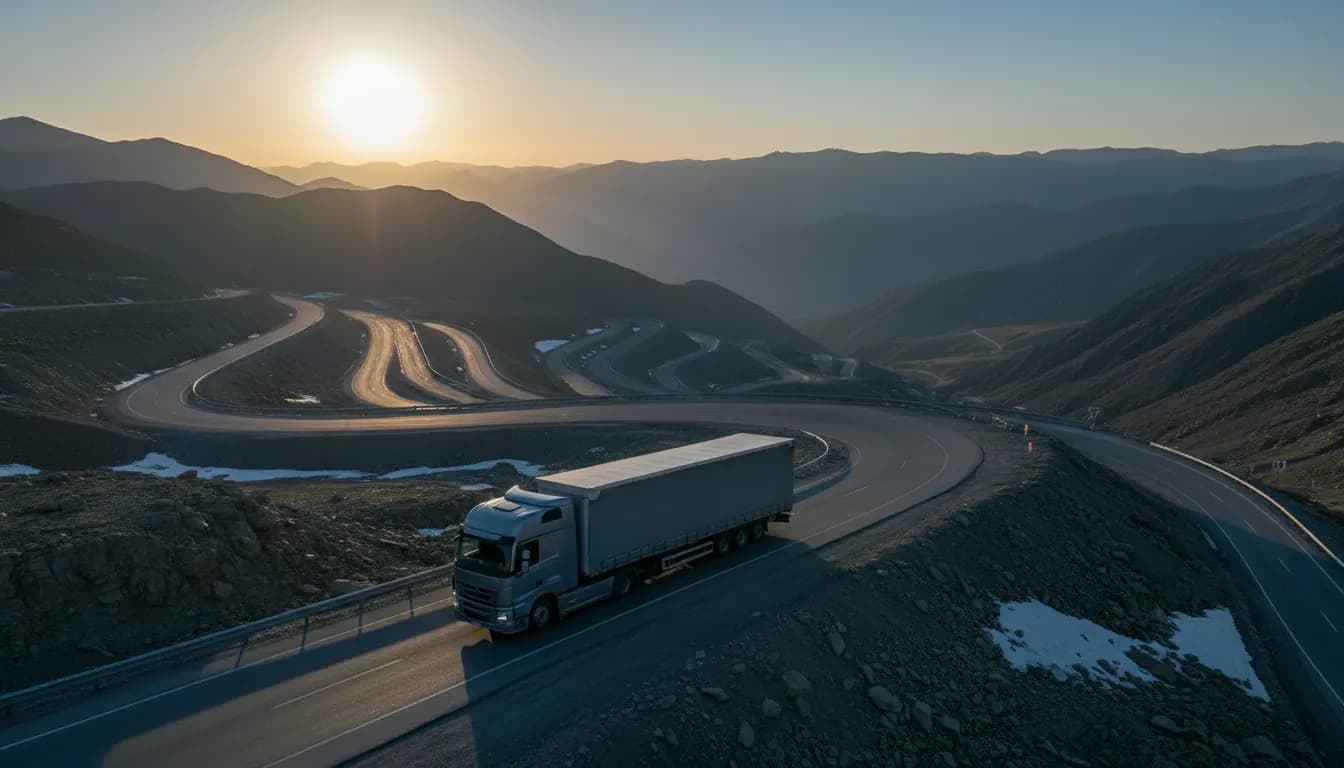
The Middle Corridor: why the Caspian route became a must-have option
The Trans-Caspian route is longer and more complex than the northern one, but it removes dependence on a single transit state. Upsides, timings, bottlenecks.
The Middle Corridor is the chain China — Kazakhstan — Caspian Sea — Azerbaijan — Georgia — Türkiye or Europe. A few years ago it looked exotic: too many transhipments, too little capacity. Today it is the second most important land route between Asia and Europe, and shippers increasingly build it into their plans as either the primary or the backup option.
The main difficulty is the number of transhipments — at least three: the gauge change at the China–Kazakhstan border, ferry loading at Aktau and discharge at Alat. Every transhipment means a queue, weather risk on the Caspian and extra documentation. Hence the wider spread of transit times: 18–28 days instead of a steady 16–20 on the northern route.
The Middle Corridor does not replace the northern route — it gives you a second option when the first is unavailable. That is precisely its economic value.
The practical takeaway: do not lock a route in once and for all. Keep both corridors in your forwarding contract and switch based on actual infrastructure load on the dispatch date. The cost difference is usually within 10–15 %, while the difference in predictability can be decisive.
Describe the cargo — we return a full breakdown and transit time within two working hours.
Get a quote